Beyond the Equipment: What Occupational Therapy is Really All About
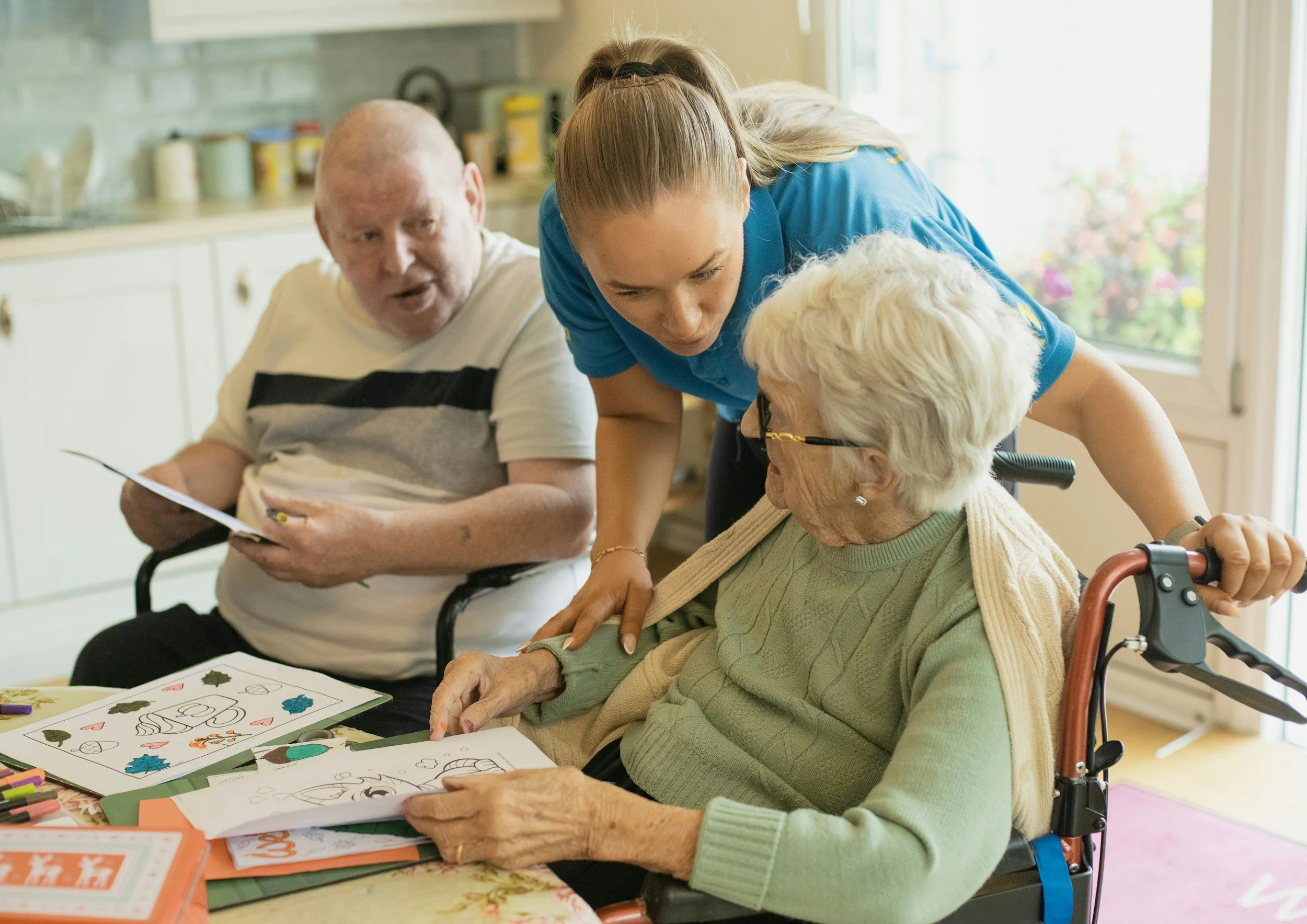
I've been a qualified Occupational Therapist for 16 years, and in that time I can confidently say this: I have never woven a basket. Not for myself, and not as a therapeutic activity.
Occupational Therapy has long been stereotyped as the profession of "basket weavers", and more recently, as the profession that simply hands out equipment. In my career, I've genuinely lost count of the number of Mowbrays (raised toilet seats and frames) I've issued. But what I love most about my job is the variety and creativity it offers, every single day.
So, what is Occupational Therapy, really?
At its heart, Occupational Therapy is about helping people do the things that matter to them. "Occupation" doesn't just mean “job”, it means any meaningful activity that fills your day, whether that's making breakfast, managing medication, returning to work, getting back behind the wheel, or playing with your grandchildren. It's a profession built around enabling participation in everyday life, not simply prescribing equipment, and certainly not basket weaving!
Therapy as unique as you: why no two sessions are the same
Being truly client-centred means that no two interventions ever look alike. Taking the time to understand a person, including what motivates them, what frustrates them, what they're working towards, allows me to design activities that are meaningful, purposeful and motivating.
For one client, that might be cooking, which quietly works on fine motor skills, strength, sequencing and confidence all at once. For another, it might be a game of draughts or a round of Uno, supporting attention, problem solving and social engagement. It doesn't feel like exercise, and that is exactly the beauty of Occupational Therapy.
"All you do is make cups of tea…"
I still remember coming home from university after a lecture where we'd spent an hour drawing, painting and expressing ourselves. My friends laughed, and I can see why. Even now, a close friend jokes that all I do is make cups of tea — or rather, help other people make them.
What they don't see is everything happening underneath that seemingly simple task. In a single cup of tea, I'm assessing cognition, physical ability, sequencing, balance and safety by using an activity that most people complete several times a day without a second thought. That is the difference between just observing a task and skilfully analysing one. It's also why occupational therapists are uniquely placed to support people after illness, injury or a change in ability: we work with the real, messy fabric of daily life, not a sterile gym environment.
The freedom of private occupational therapy
Since moving into private practice with Ocupa, it has been incredibly refreshing not to be confined by standardised settings, cheapest-option equipment prescriptions, or having to over-justify meaningful rehabilitation.
Being able to work creatively, flexibly, and for as long as is genuinely needed, all while focusing on what truly matters to each person, brings me huge job satisfaction and real joy in my work. It also produces better outcomes, because rehabilitation rooted in someone's real life is rehabilitation they will actually engage with. (If you're weighing up your options, our piece on the difference between rehabilitation and reablement is a good place to start, alongside our explainer on Occupational Therapy vs Physiotherapy.)
More than equipment. More than baskets.
Occupational Therapy is so much more than equipment. It's about people, purpose and participation in everyday life, and that is why, 16 years on, I still love what I do.
If you, a family member, or a client you're supporting could benefit from genuinely client-centred occupational therapy, the Ocupa team is here to help. Book a consultation or make a referral — we'd love to hear from you.